Investing in financial markets offers the potential for significant returns, but it also exposes traders and investors to unavoidable risks. Market volatility, sudden economic shifts, or geopolitical events can quickly erode capital if positions are left unprotected. For both beginners and seasoned traders, understanding how to manage these risks is crucial. One of the most effective tools for doing so is the stop-loss order, a mechanism designed to help investors limit potential losses while maintaining a disciplined trading approach.
Understanding stop-loss orders and how they function can be the difference between weathering market turbulence and experiencing avoidable setbacks. This article explores the concept of stop-loss orders, their practical applications, and how incorporating them into your trading strategy can safeguard your portfolio.
What Is a Stop-Loss Order
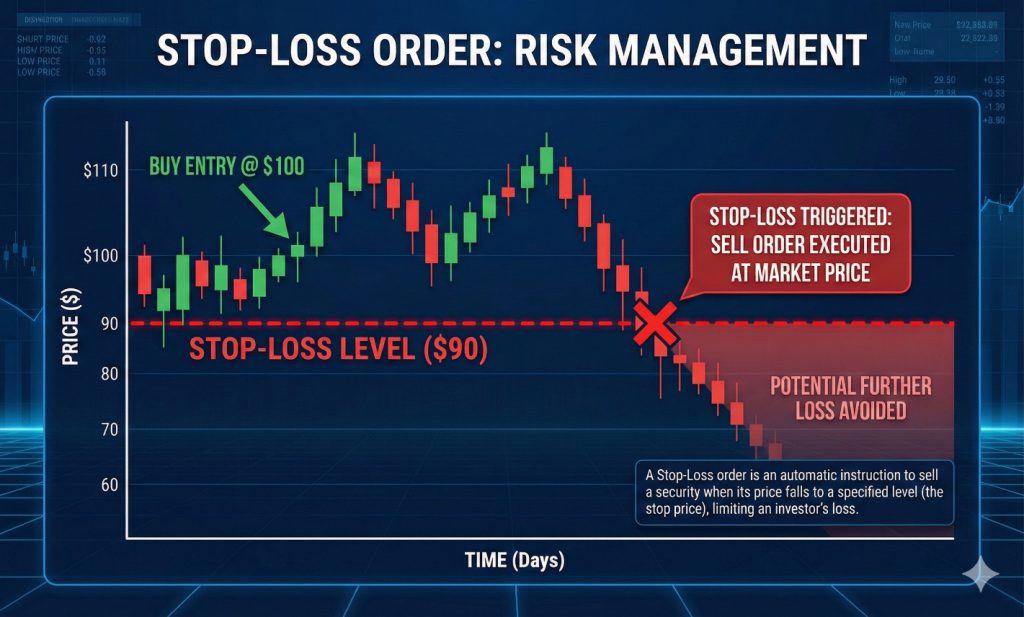
A stop-loss order is an instruction given to a broker to automatically sell a security when it reaches a predetermined price. The primary purpose of this order is to limit losses in a position by triggering an exit before losses escalate beyond an investor’s tolerance level. For example, if an investor buys a stock at $50 and sets a stop-loss at $45, the position will be automatically sold if the stock price falls to $45. This ensures that losses are capped at a manageable level without requiring the investor to monitor the market continuously.
Stop-loss orders are especially valuable in volatile markets where prices can fluctuate rapidly. They remove emotion from decision-making, preventing panic selling or holding onto a losing position in the hope of a rebound. This disciplined approach allows traders to focus on long-term strategy rather than reacting impulsively to short-term market swings.
Types of Stop-Loss Orders
There are several variations of stop-loss orders, each offering different levels of flexibility and control. The traditional stop-loss is executed at the market price once the trigger price is reached. While it guarantees execution, the final sale price may differ slightly due to market volatility.
A trailing stop-loss moves with the market price either by a fixed amount or a percentage. For example, a 5 per cent trailing stop on a rising stock automatically adjusts upward as the stock price increases. This allows investors to lock in gains while still protecting against downside risk.
A stop-limit order triggers a sale only within a specified price range. This gives investors more control over execution prices but carries the risk that the order may not be filled if the market moves too quickly.
The Importance of Stop-Loss Orders in Volatile Markets
Volatile markets amplify the risks inherent in trading. Prices can swing sharply in short periods, influenced by economic reports, corporate earnings, interest rate changes, or global events. In such conditions, a small miscalculation can result in substantial losses. Stop-loss orders act as a safety net, ensuring that losses are contained and capital preservation remains a priority.
Beyond limiting losses, stop-loss orders contribute to psychological stability. Market volatility can evoke strong emotions such as fear and greed, leading to poor decision-making. By setting predefined exit points, traders can avoid emotional reactions, maintain discipline, and adhere to their overall investment strategy.
Effective Strategies for Stop-Loss Orders
Effectively using stop-loss orders requires thoughtful planning. Determining the maximum loss you are willing to accept on a trade is essential. This figure should be based on your overall portfolio size and personal risk tolerance.
Market volatility should guide where stop-loss levels are placed. Setting stops too close to the current price may result in premature execution, while stops set too far away could allow losses to escalate. Historical price movements can help identify an appropriate distance.
Adjusting stop-loss orders to reflect changes in market conditions, portfolio composition, or personal financial goals ensures they remain effective. Traders seeking detailed guidance can explore stop loss in trading for practical applications and strategic insights.
Common Mistakes to Avoid
Even experienced traders can make errors when using stop-loss orders. One mistake is setting stops based on arbitrary numbers rather than analysis, which can result in being stopped out too early or too late. Another is failing to adapt to changing market conditions, exposing positions to unnecessary risk. Some investors neglect having a clear exit plan, reducing the effectiveness of their stop-loss strategy.
Avoiding these pitfalls requires careful planning, ongoing monitoring, and a commitment to disciplined trading principles.
Additional Benefits of Stop-Loss Orders
While their primary function is risk management, stop-loss orders provide additional advantages. They reduce the need for constant market surveillance, allowing investors to focus on strategy. They also support consistent trading performance by reinforcing discipline and limiting emotion-driven decisions.
For investors building long-term wealth, these benefits translate into more resilient portfolios and the ability to navigate volatile markets with confidence. Protecting capital systematically helps preserve both financial resources and peace of mind.
Conclusion
In the unpredictable world of financial markets, protecting capital is as important as generating returns. Stop-loss orders provide a practical way to limit losses, maintain trading discipline, and navigate volatile conditions confidently. By understanding the different types of stop-loss orders, aligning them with risk tolerance and strategy, and avoiding common mistakes, investors can make them a cornerstone of a structured trading approach.
Incorporating stop-loss orders is not merely defensive; it is a proactive step toward long-term trading success. By safeguarding investments and maintaining composure during market turbulence, traders can pursue their financial goals with confidence.